The TEA-ROOM
SOTOROJI #2
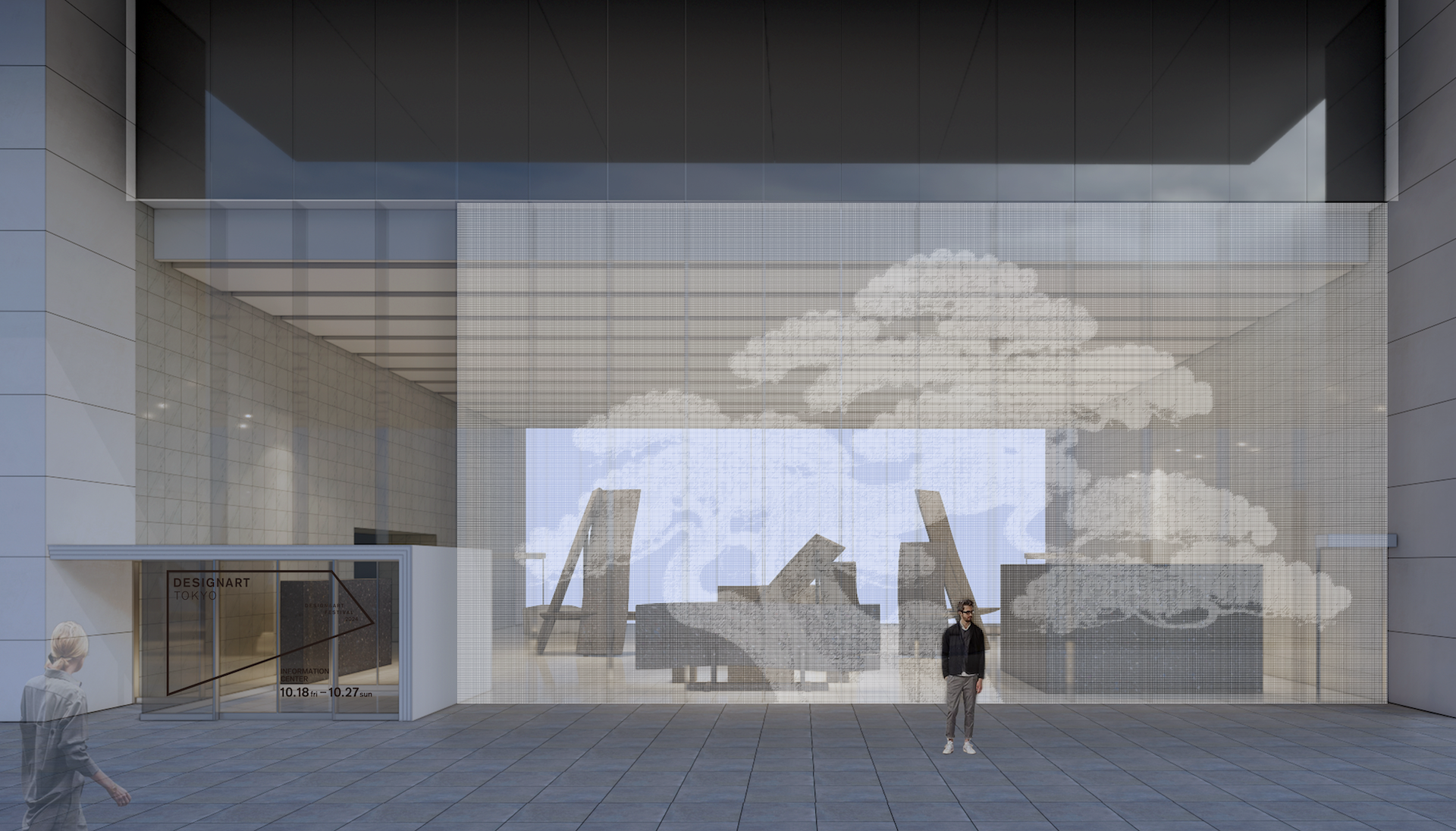
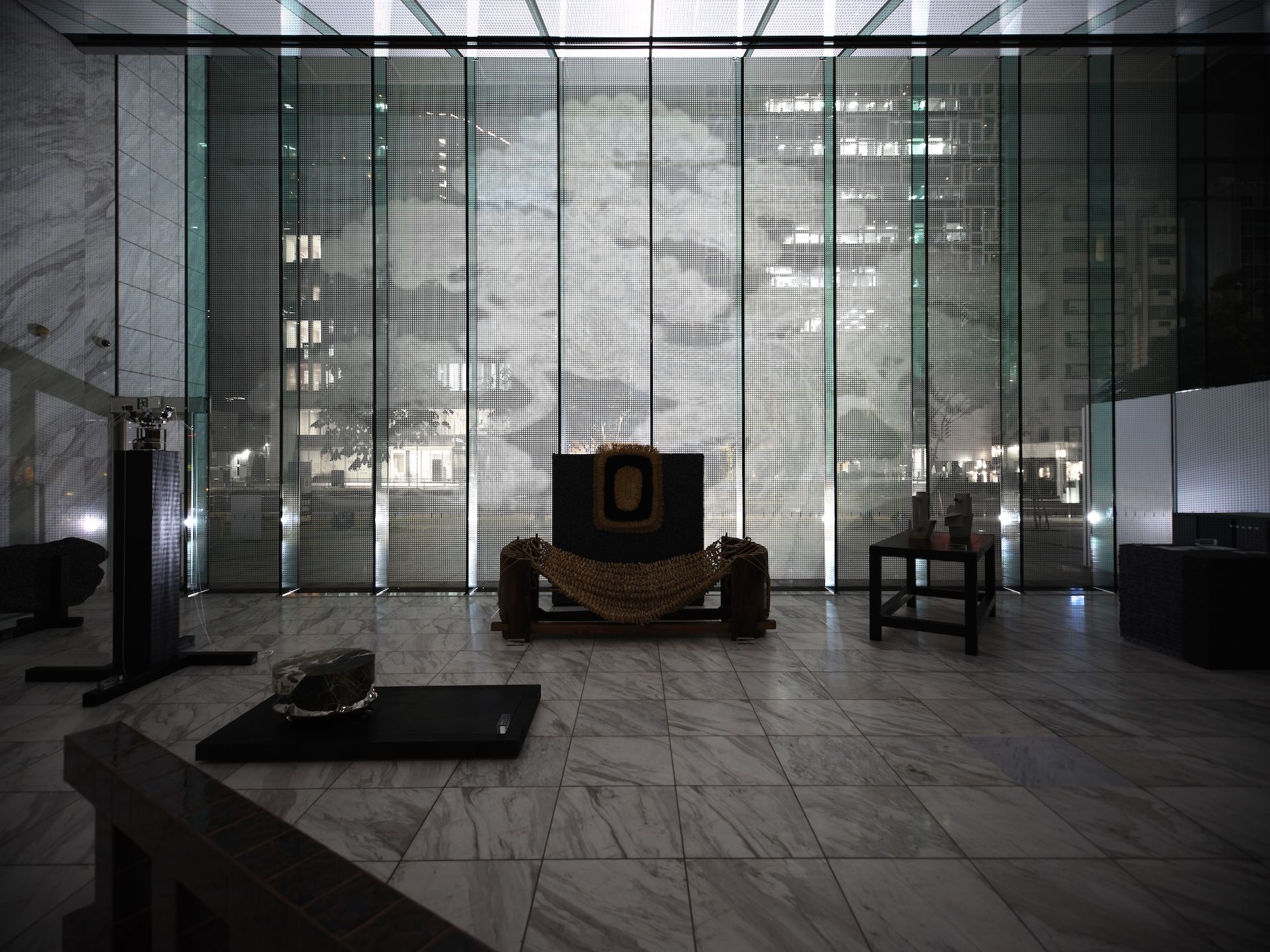
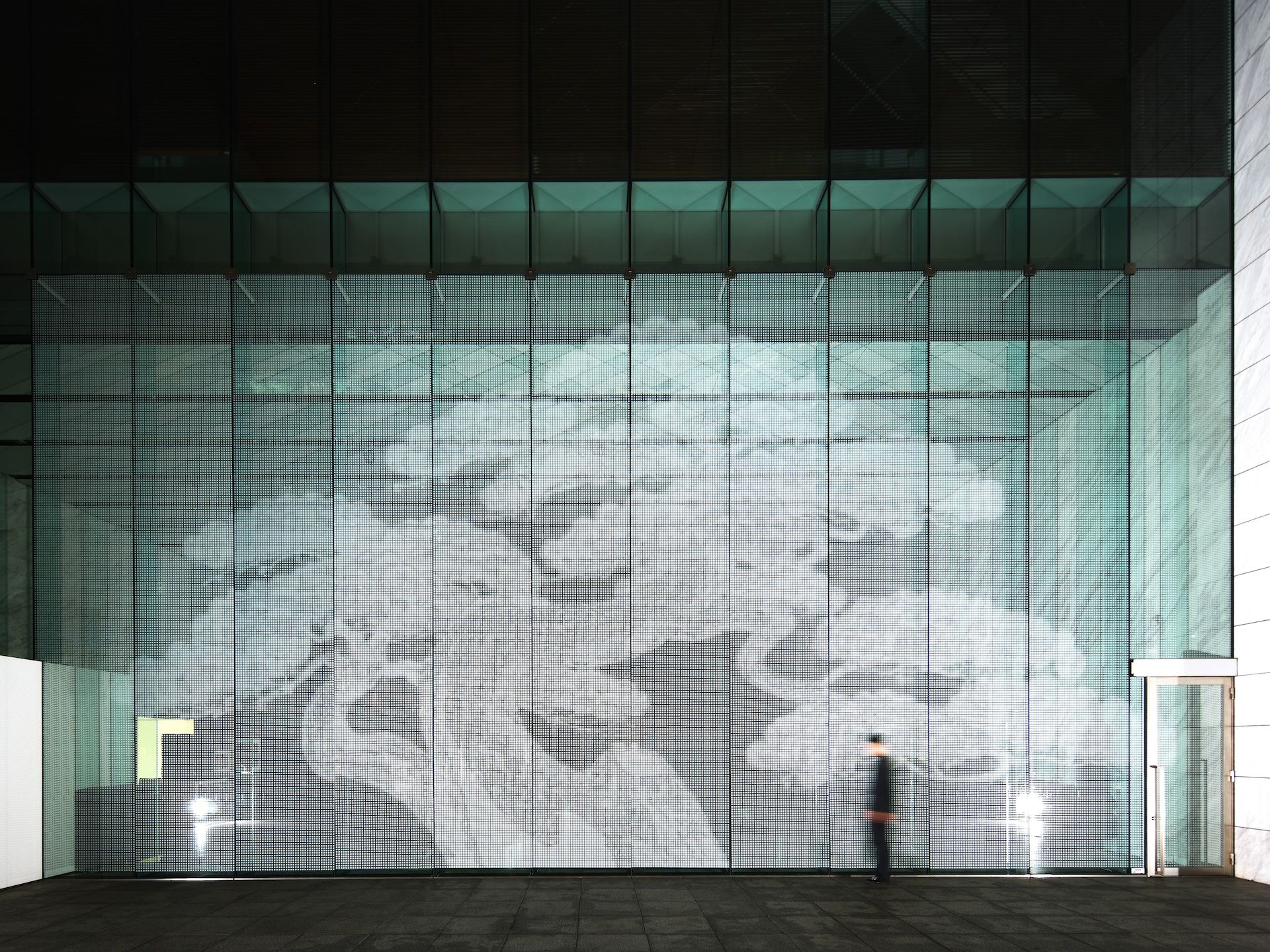
“SOTOROJI #2” is part of the SOTOROJI series of spatial devices that lead from the ordinary to the extraordinary, utilizing the modern social affordance of “seeing a QR code and scanning it with a camera,” just as soto-roji (the outer garden,) in the chanoyu (the Japanese tea ceremony) serves as a space leading to a world of profound subtlety. This work uses an old pine tree, considered a yorishiro (object capable of attracting spirits) for the god of performing arts, as its motif, expressing it through more than 130,000 QR codes across an area exceeding 100 square meters, becoming a boundary where physical and digital spaces, the ordinary and extraordinary, and reality and profound subtlety intersect. When viewers scan the QR codes, they are led to spaces of over 100 artists, testing whether they can transcend their own frameworks.
chanoyu (the Japanese tea ceremony): It is a Japanese comprehensive art form composed of gardens, architecture, painting, calligraphy, incense, flower arrangement, sound, utensils, food, clothing, and etiquette. It is a traditional Japanese ritual deeply connected not only with Zen but also with other Japanese traditional performing arts like Noh and Kabuki. The TEA-ROOM, composed of artists involved with tea ceremony, reinterprets and expresses the tea ceremony using contemporary situations and objects.
soto-roji (the outer garden): Tea masters admired the world of profound subtlety depicted in ink paintings and expressed this worldview in tea rooms and tea gatherings. Tea rooms, including their gardens, are designed to gradually lead into this world of profound subtlety. The garden path from the entrance (rojiguchi) to the middle gate is called the outer garden, where guests participating in tea gatherings brush off worldly dust, immerse themselves in the world of profound subtlety, and engage in higher-dimensional play.