The TEA-ROOM
SOTOROJI #1
What does capitalism recognise as valuable, and what does it push beyond its field of vision?
In chanoyu (the Japanese tea ceremony), the soto-roji, or outer garden, is the first space through which guests pass on their way towards the inner garden and the tea room. Its arrangement of garden, objects, gestures and rituals functions as a shared spiritual protocol, helping participants brush away the ‘dust of the everyday’ and enter another mode of perception. The SOTOROJI series reinterprets this mechanism through the QR code, a protocol shared by contemporary life.
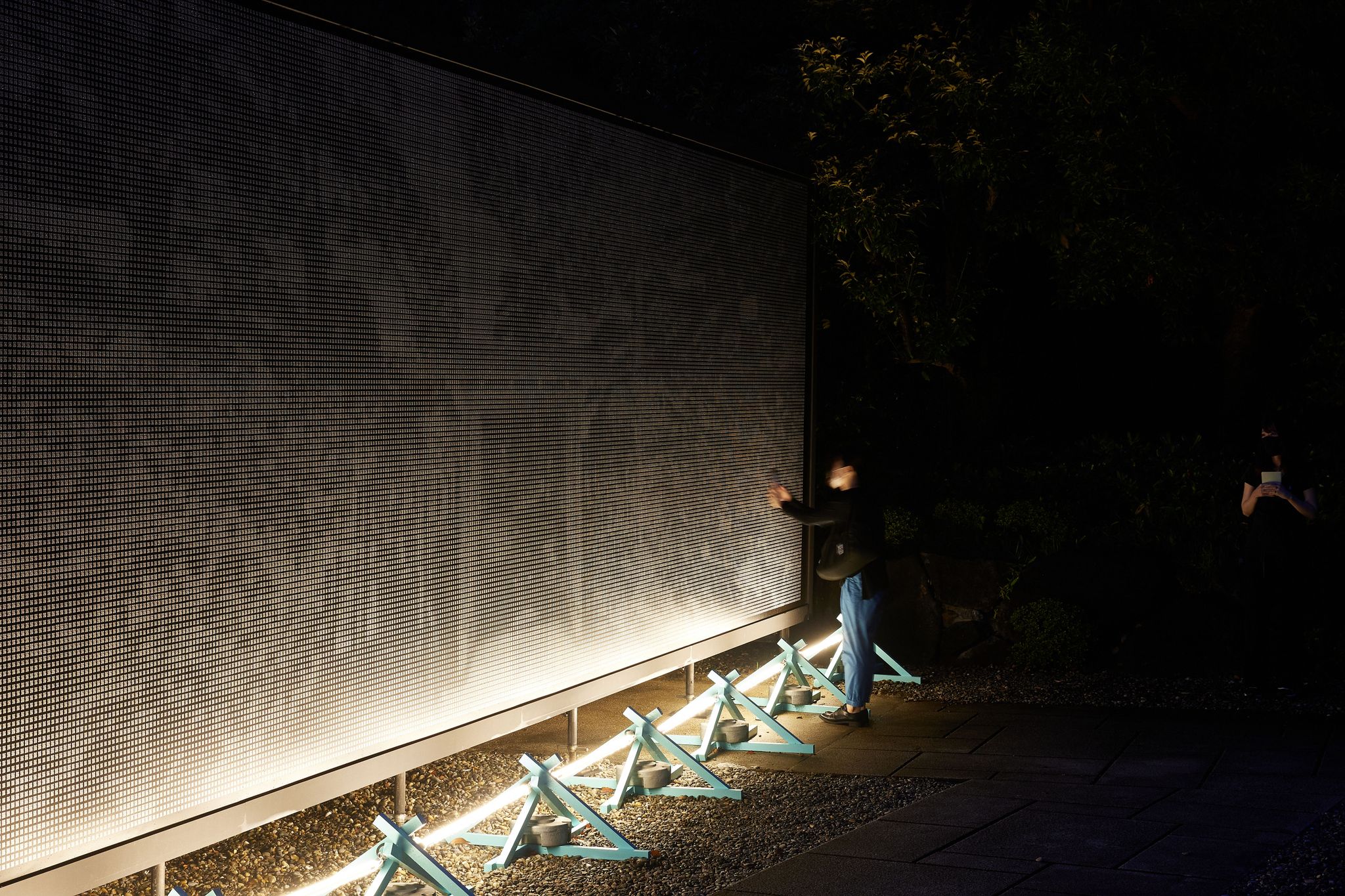
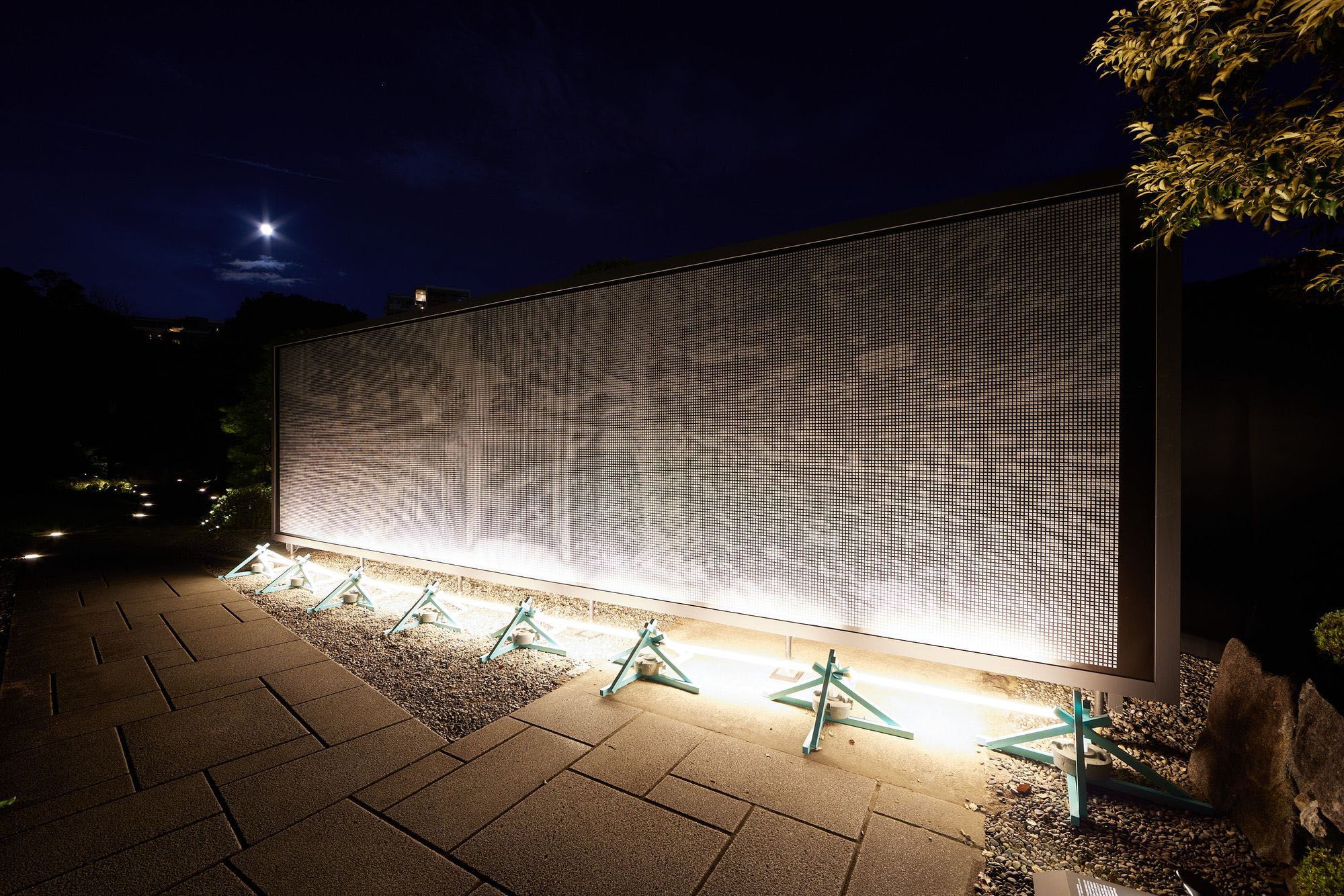
SOTOROJI #1 is composed of more than 100,000 QR codes of varying sizes. Up close, it appears as an accumulation of codes; from a distance, differences in their scale bring a view of an outer garden into focus. Each code leads to the website of an NPO or organisation whose work includes supporting children who have lost parents or addressing environmental issues. These are social practices whose value cannot be fully measured—and which are often insufficiently supported—by the logic of profit and exchange alone.
The work was installed at the entrance to Jack into the Noösphere, one of three programmes presented at Mihama-en Japanese Garden as part of the Chiba City Festival of Arts. Before entering the exhibition, visitors pointed their cameras towards the codes and encountered one of these activities. An everyday gesture of accessing information became a rite of passage, redirecting attention towards forms of value that ordinarily remain difficult to see.