Simulated Consensus
The vote has not yet taken place. Yet its outcome has already been tested again and again.
A 2024 study reported that choices made by large language models given particular attributes and backgrounds could exhibit a degree of similarity to the voting tendencies of people with comparable profiles. What matters is not whether AI can perfectly reproduce each individual judgement. If a population of virtual voters can approximate real patterns of choice closely enough, a vote that has not yet taken place can be run repeatedly in advance. The framing of the question, the wording of the options, and their combinations can then be adjusted until they produce an outcome desired by the designer.
The work was developed through a residency at the Asia Culture Center (ACC), a national institution for arts and culture in South Korea, in Gwangju Metropolitan City—a city that carries the memory of the 1980 May 18 Democratic Uprising. In a work concerned with democratic decision-making, Gwangju is more than a site of production. By constructing a virtual electorate from the city’s statistical data, the work brings the history of democracy into contact with a present in which collective will can be predicted and designed.
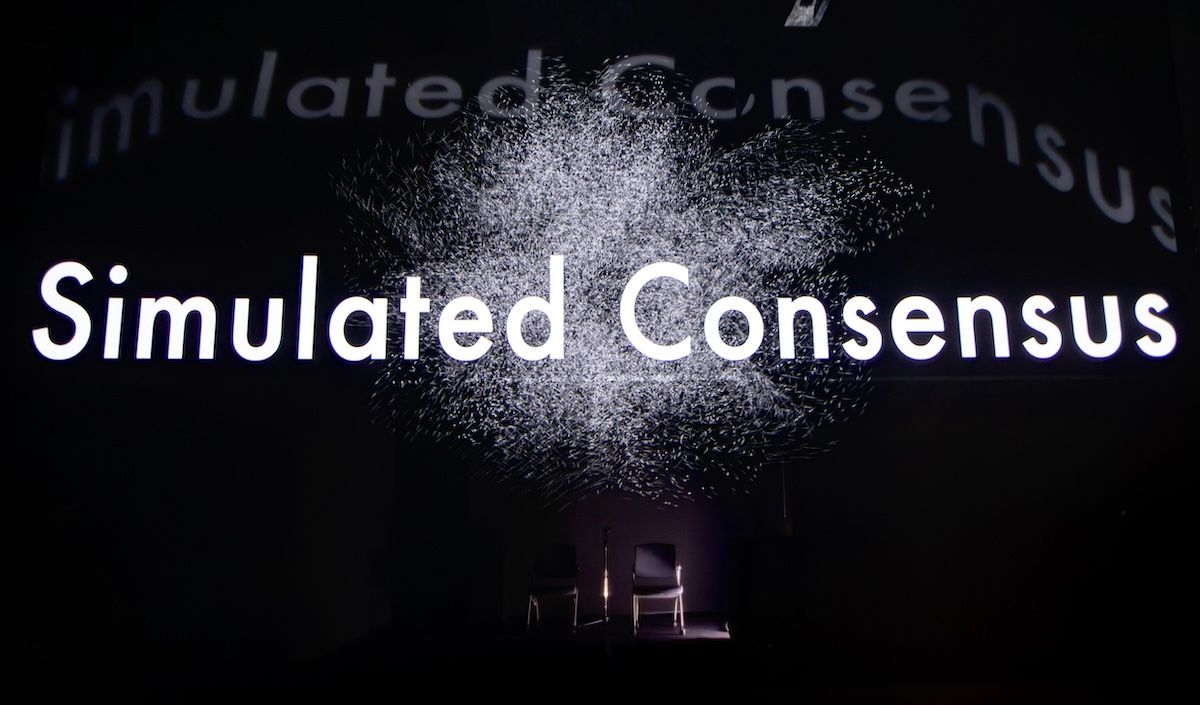
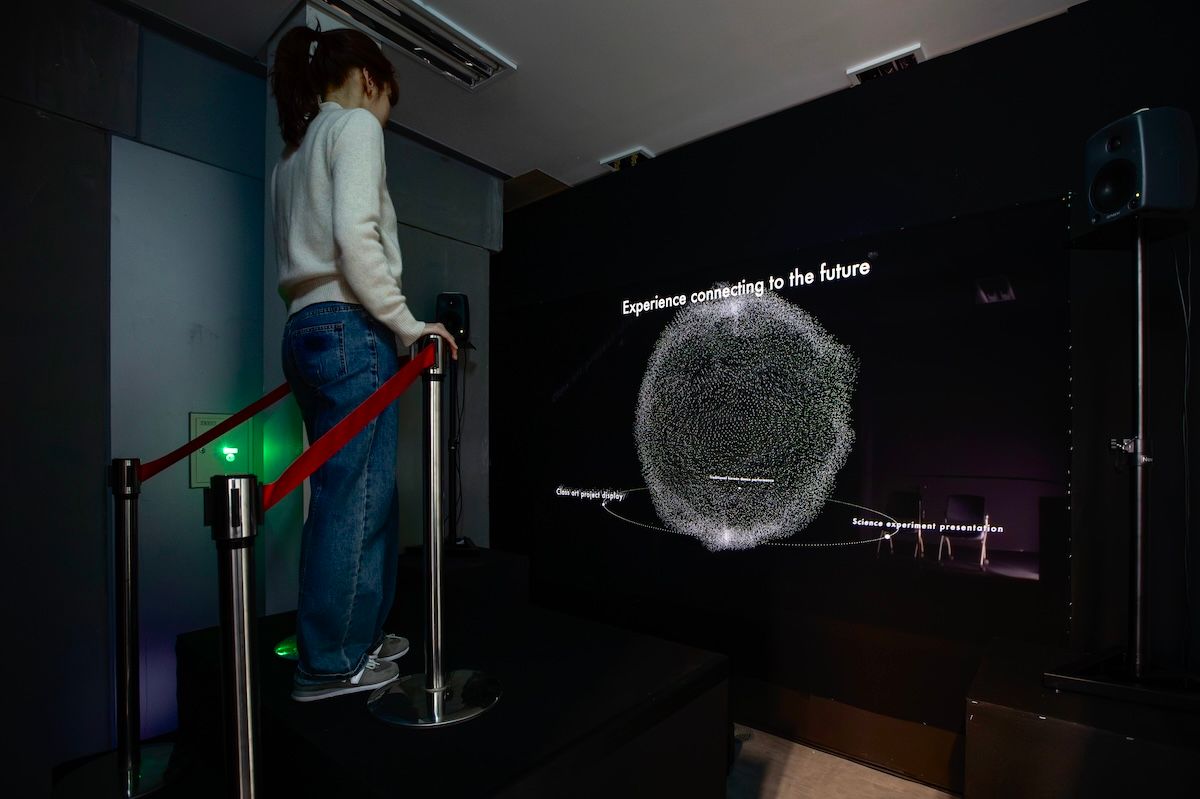
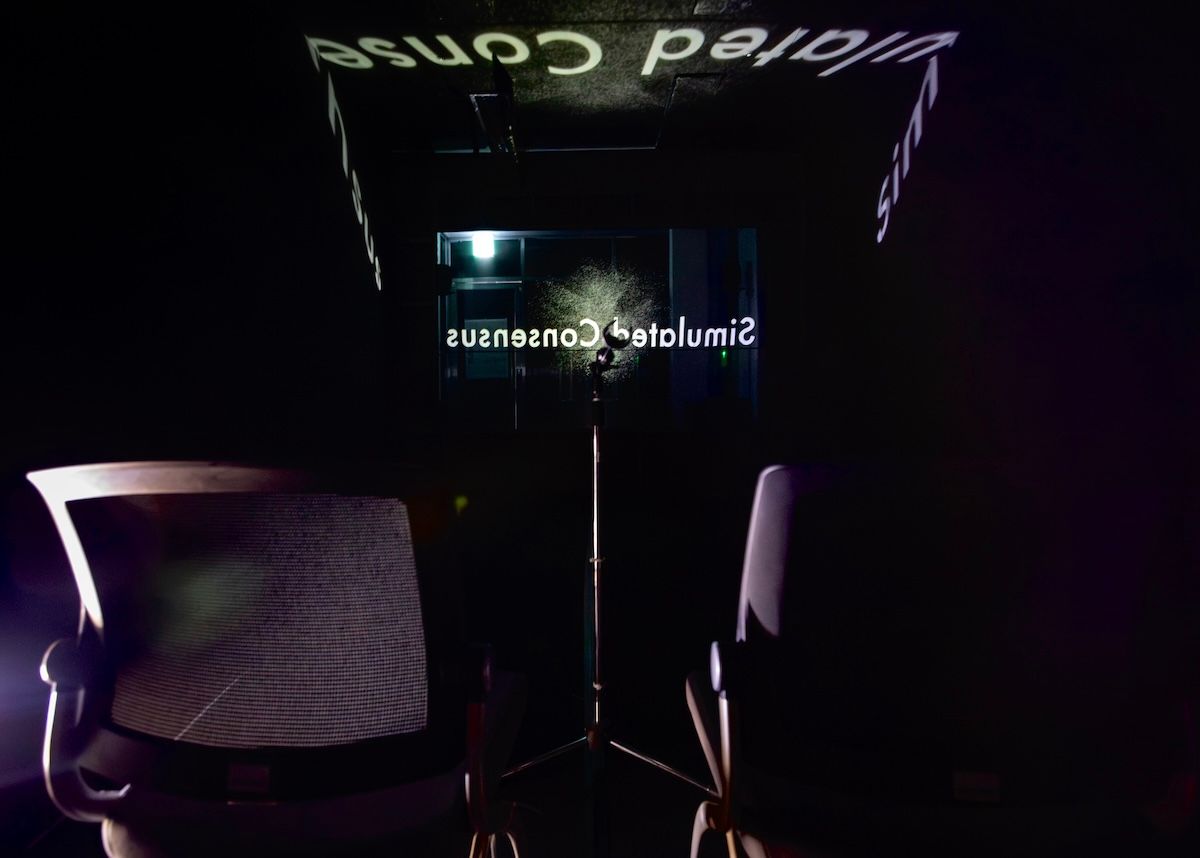
Simulated Consensus takes the form of a demonstration space for a new service offered by a fictional technology company. Visitors are received as prospective clients and introduced, through an interactive dialogue, to a vote-simulation service.
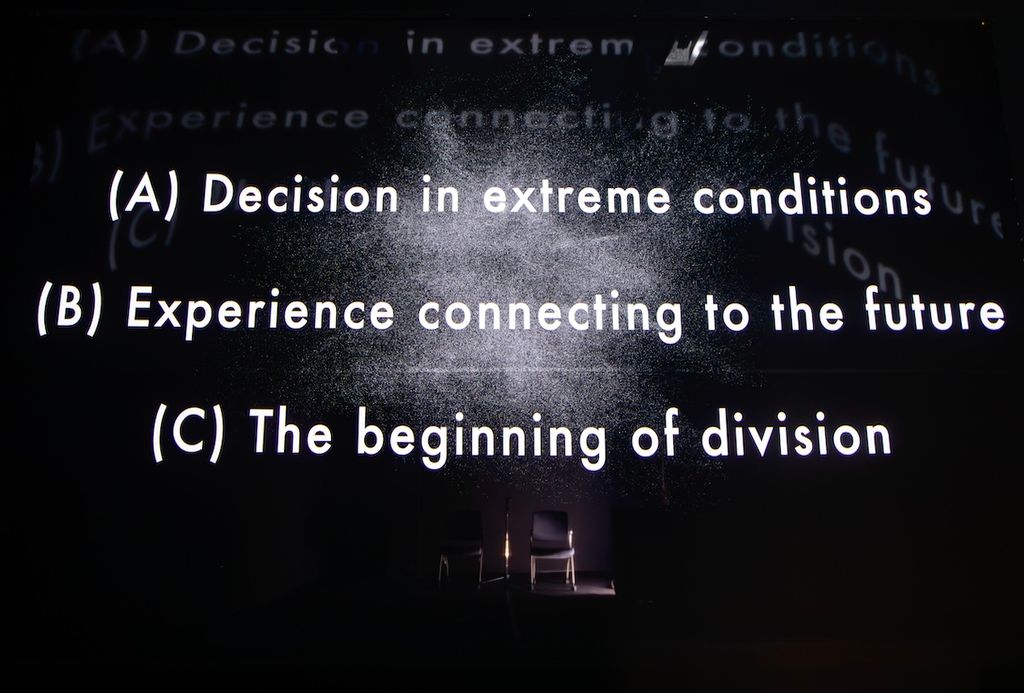
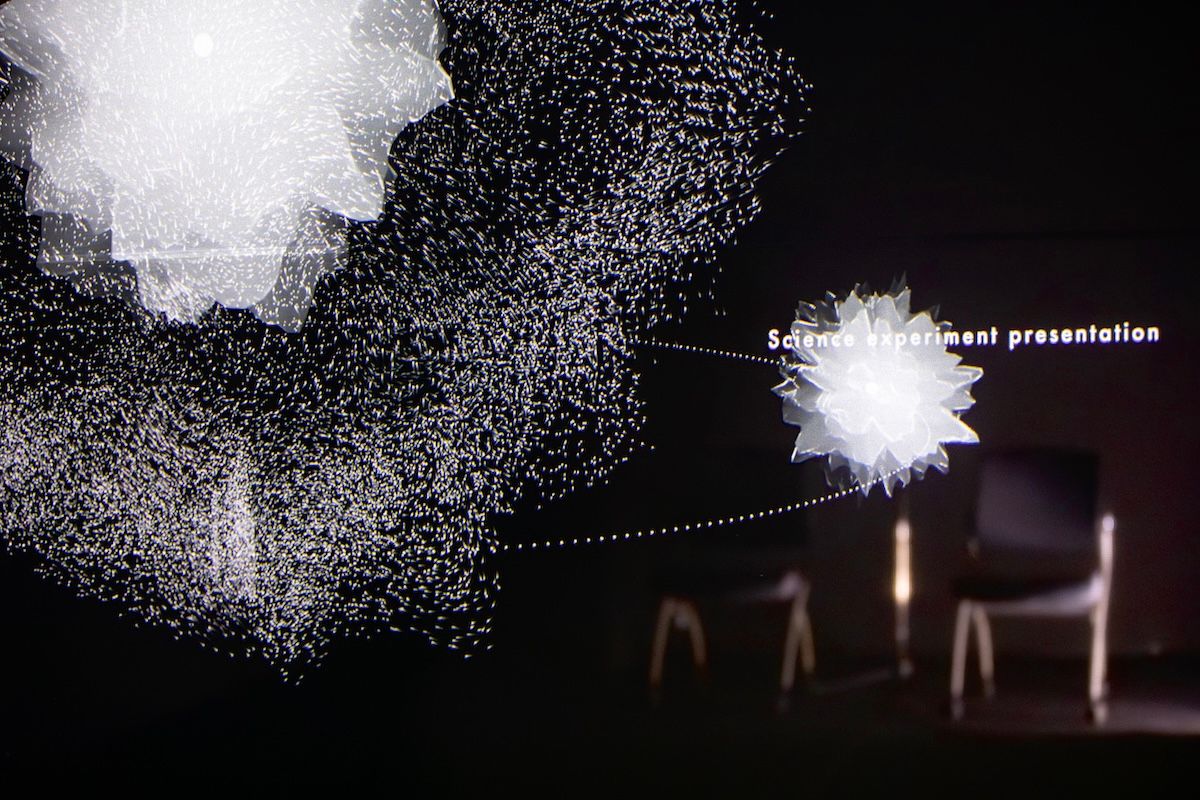
Using statistical data from Gwangju Metropolitan City, the service generates approximately 100,000 virtual voters, each defined by attributes including gender, age, income, marital status, dependants, occupation, education, political orientation, environmental awareness, religion or belief, and lifestyle. The AI agents acting as these virtual voters appear as countless particles suspended in mid-air. Shifts in their distribution and aggregation visualise how a collective choice takes shape.
Its application is not limited to elections. It can be used wherever groups make decisions through voting—in companies, organisations, and communities. Before an actual vote takes place, a client can predict its outcome and continue adjusting the question and its options until an outcome favourable to their interests emerges.
In the actual vote, no ballots are altered and no count is falsified. People vote as usual and choose of their own accord. What they do not know is that the options have already been tested repeatedly and designed to lead towards a particular result. What is manipulated is not the ballot itself, but the conditions of choice: what is asked and what can be chosen.
Decisions reached through voting function as social contracts that bind a group. Once accepted as the collective will produced by a legitimate process, the result cannot easily be reversed. In this way, predesigned conditions of choice are transformed, through democratic procedure, into the will of the group.
Simulated Consensus does not ask about a future in which AI makes decisions in place of humans. It asks about a present in which people choose for themselves, while the conditions of that choice have already been calculated and designed.