ALTERNATIVE MACHINE
CCDLS
The “Citizen Collaboration-based Decentralized Logistics System” aims to create an alternative logistics system that captures the daily movements of each citizen, such as commuting and going to school, as a logistics network, realizing the movement of goods through people’s cooperation, and inducing encounters between individuals.
The existing logistics system focuses on delivering goods in large quantities, quickly, and at a low cost. Should all logistics be like this? For example, with a large number of unread books at home, is it really necessary for a purchased book to arrive the next day? There must be other items that don’t need next-day delivery and could be fine with delivery within a week.
The existing logistics business model depends on the volume of circulation. Naturally, as the number of people sending decreases, so does the volume of logistics. With the decreasing population, especially in depopulated areas, railway abandonment and the discontinuation of bus routes are progressing due to unprofitability. Similarly, the downsizing or withdrawal of logistics companies is also being considered.
In fact, the cost of individual home delivery in regional cities is increasing, beginning to affect the local economy. If logistics companies withdraw, delivery costs will dramatically increase, and it will be unavoidable that small-scale farmers and other small businesses will be severely affected.
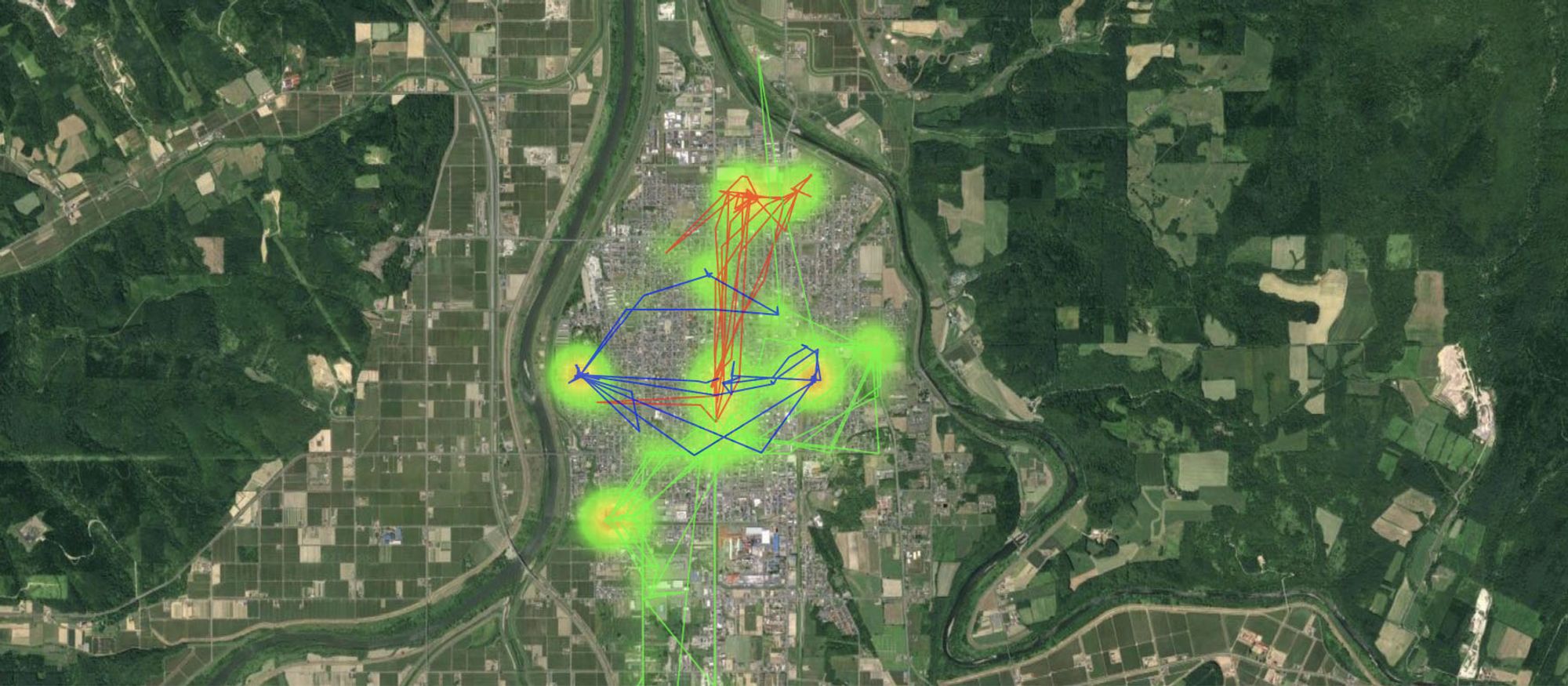
To break away from the existing paradigm and explore a new logistics system to solve the last-mile problem of individual delivery, such as increased costs due to population decline, a joint research project was conducted with Denso Corporation. Nayoro City in Hokkaido, which was designated as a depopulated area in 2002, has experienced a population decline and an increase in railway abandonment, and was chosen as a model city due to its awareness of logistics issues.
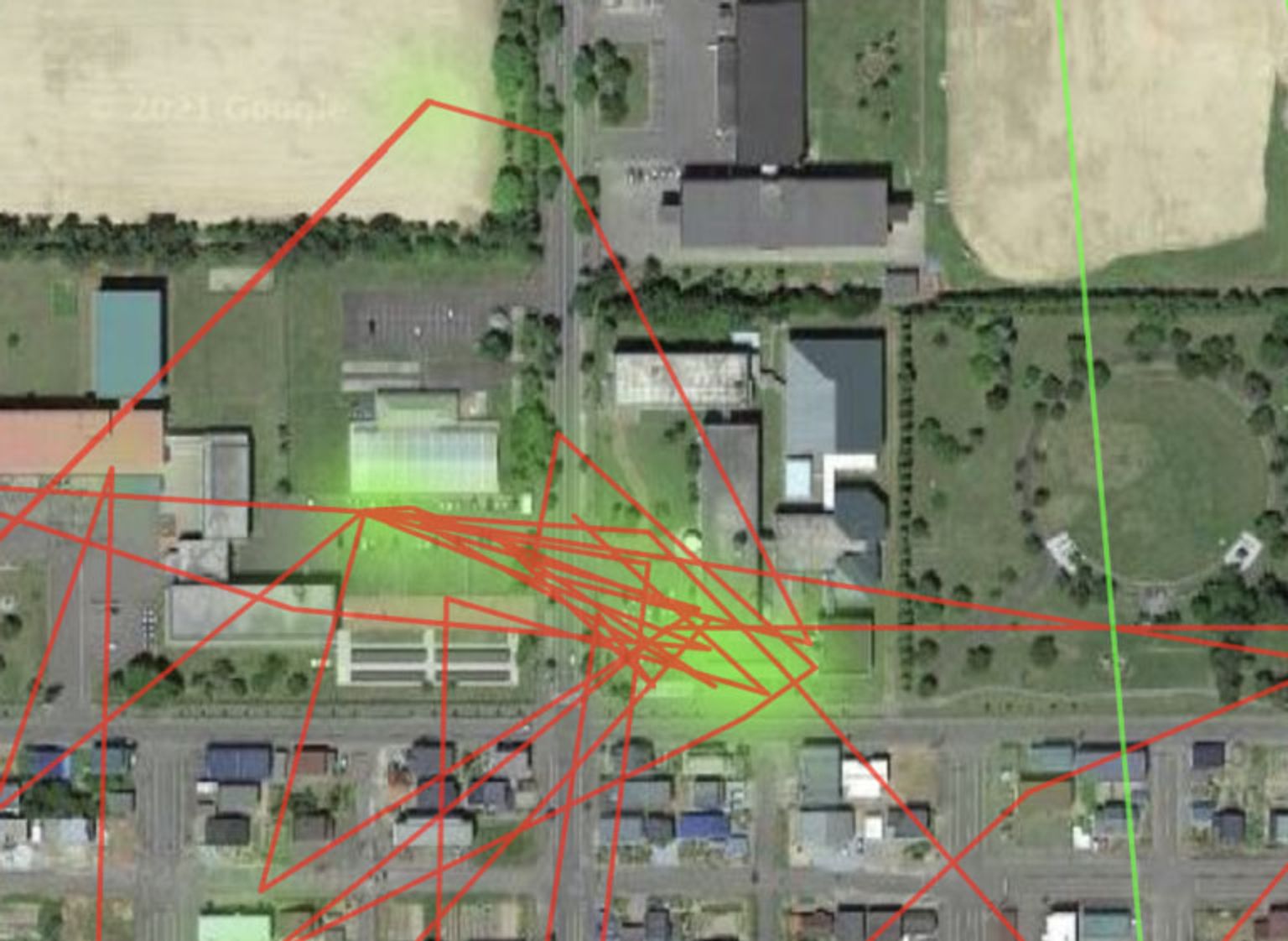
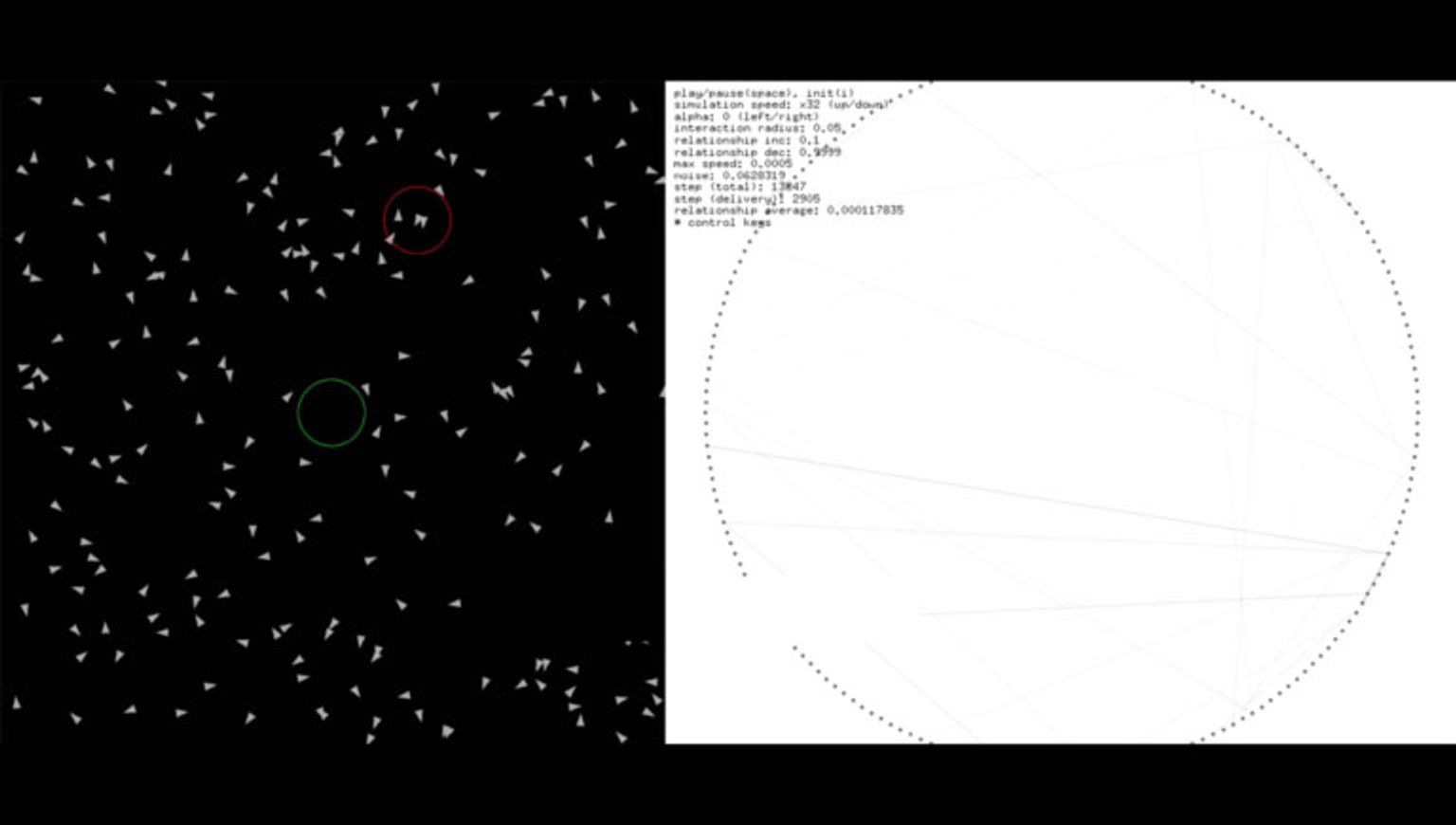
Interviews were conducted with the mayor of Nayoro City, logistics companies, and citizens. At the same time, simulations were created and theoretical verification was carried out to determine whether it was possible to reach the target point from the random movements of multiple people. Ultimately, the behavioral data of 11 people, mainly university students in the city, were collected for two months, and an analysis of their movement routes and activity times was conducted.
By opening up the usual activities of many people to others through technology, there is the potential to solve problems in the local community. The hope is that it will not only serve as a means to transport goods but also create opportunities for communication, leading to the revitalization of local communities.