The TEA-ROOM + METACITY
Artificial Moons
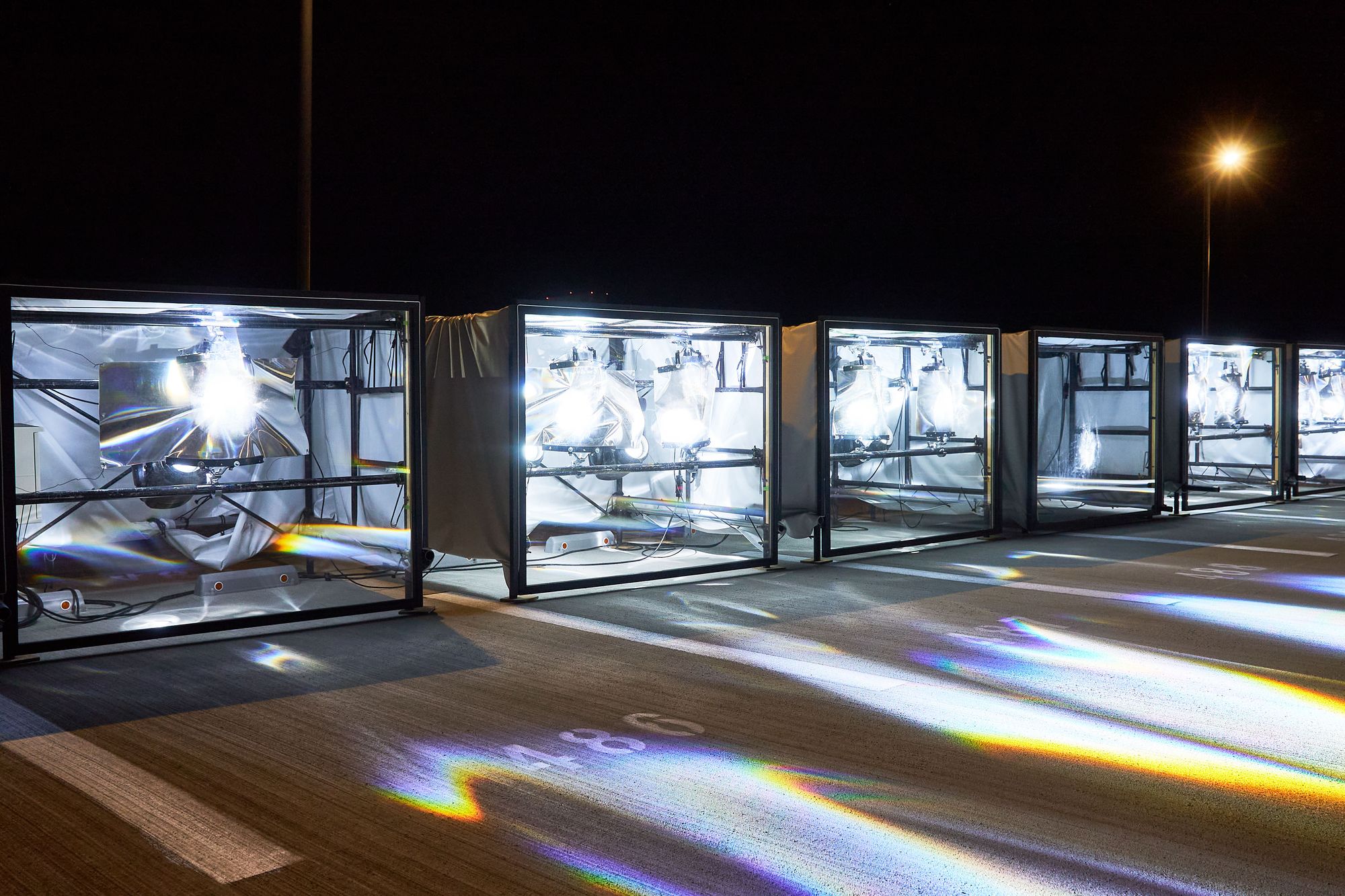
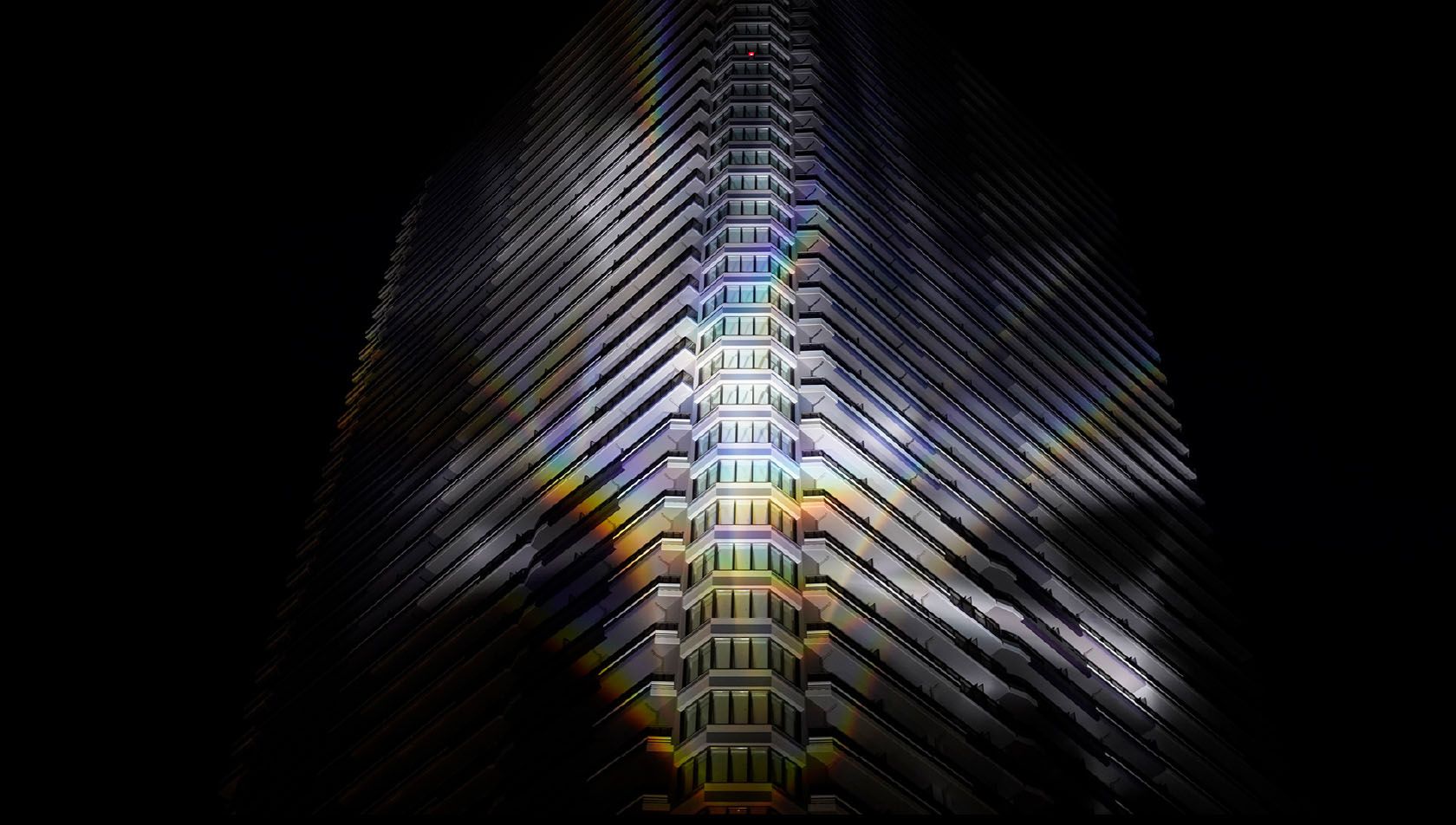
“Artificial Moons” is a light sculpture themed around existence born from coincidence. It explores the boundary between cultural realities of the real and virtual, based on moon-viewing culture from East Asia since ancient times, tracing to Japan’s Jomon period 13,000 years ago. The unpredictable movements of nine moons in virtual space, generated by N-body simulation from the three-body problem, synchronize with a unique reflective lighting system in physical space, projecting moonlight onto a 150-meter architectural structure.
Created during the coronavirus pandemic, this artwork tells a story about two cities—Makuhari New City and the fictional Makuhari City—wavering between real and virtual. It serves as a ritual to imprint the fictional city in consciousness, symbolizing a movement transforming a cultural desert into a cultural forest, where the moon represents culture’s source rather than the sun’s life-giving power.
The artwork is exhibited in Makuhari New City, a vast reclaimed land on Tokyo Bay’s coast developed since the 1970s. This cultural desert lacks historical and traditional foundations. With minimal solar obstruction, straight roads, futuristic high-rises, and distinct zoning, the city evokes early VR spaces and lacks certain reality despite physical existence. Although part of Chiba City, it is mistakenly introduced as “Makuhari City” in media. Taking the former mayor’s jest seriously about creating a fictional city, the art project ‘Multilayered City “Makuhari City”’ was launched at METACITY, structurally exploring cultural functions like festivity, symbolism, and consensus formation. This artwork was the inaugural public art and urban monument of fictional “Makuhari City,” displayed for one and a half months, attracting viewers from over a kilometer away, supported by Chiba City.
Japan has festivals of unknown origin like the “Kebes Festival” and “Kanda Festival.” City emblems are sometimes created from puns, as exemplified by Fukuoka City’s nine “Fu” and Kurume City’s nine “Ru.” Makuhari City’s nine moons derive from the pun of “Ma” and “9” (Maku). This artwork incorporates these nine moons. Whether anthropological ritual or modern community symbol, most people are unaware that not everything we see, participate in, and believe in necessarily has legitimate history.
Additionally, this artwork appears in the Sci-Fi short story series “Makuhari City Chronicles,” centered on Makuhari City, created as part of the project. It is depicted in the Sci-Fi short story “Makuhari City ID Card” by Naoki Prize-winning author Satoshi Ogawa.