Alternative Computations
The universe computes. Life is computation. Mathematics is the language for this understanding. Change the language, the universe changes — the way of seeing changes. Sometimes, those in power choose which way of seeing prevails. What falls outside that choice is named error — and vanishes.
Japan once possessed a distinctive mathematics — wasan. Calculation practised as beauty, play, and offering to shrines: festive knowledge comparable to haiku and the tea ceremony. In the late nineteenth century, the Meiji government introduced Western mathematics in pursuit of national strength. Wasan was expelled. The cosmos its culture alone could see was closed. At the destination Western mathematics has since reached stands quantum computing. But its development is governed by utility and optimisation. Quantum noise is expelled as error. Yet quantum noise interferes, entangles, carries the past. There is another cosmos. This work recaptures it through the play and festivity of wasan.
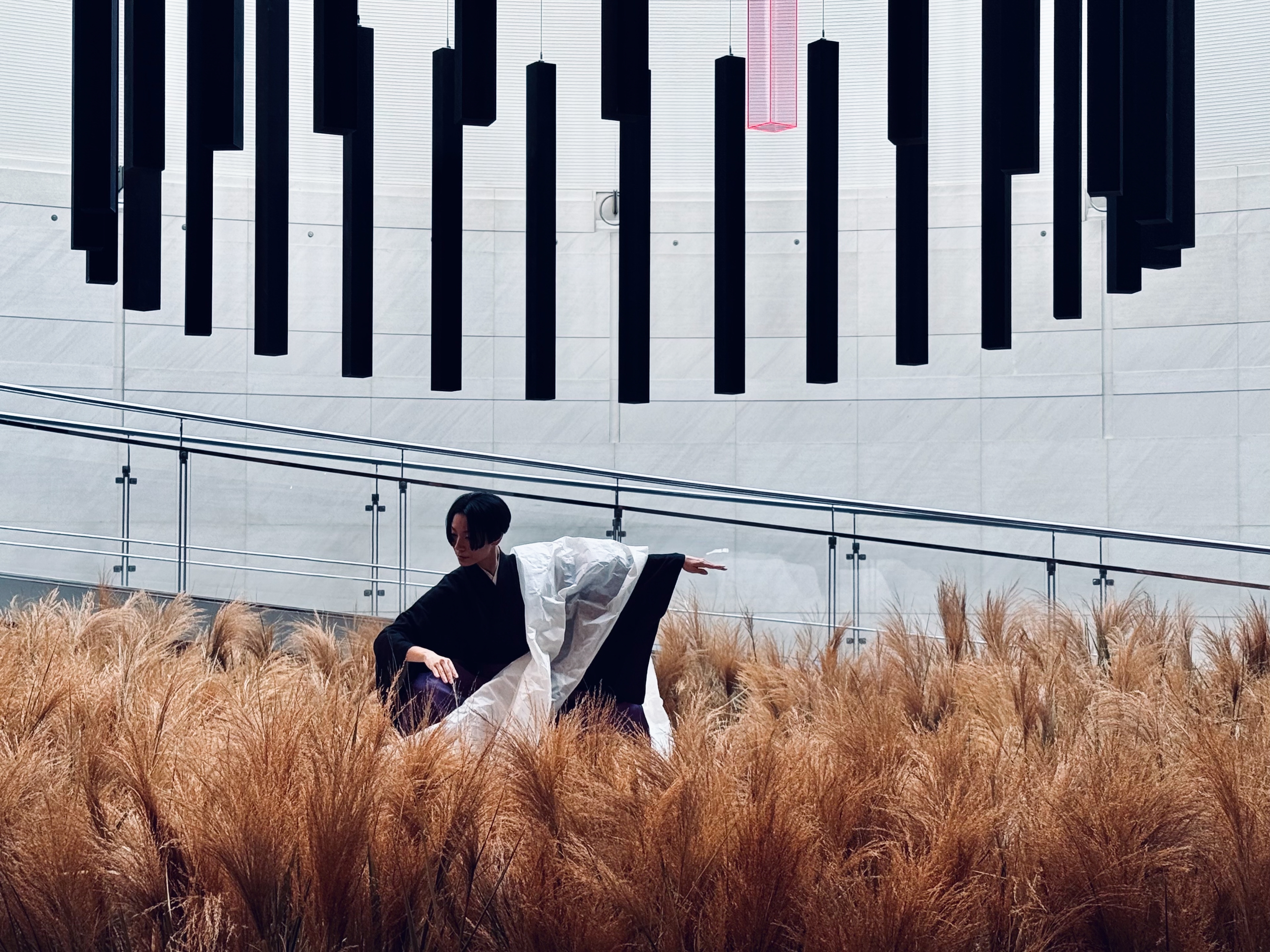
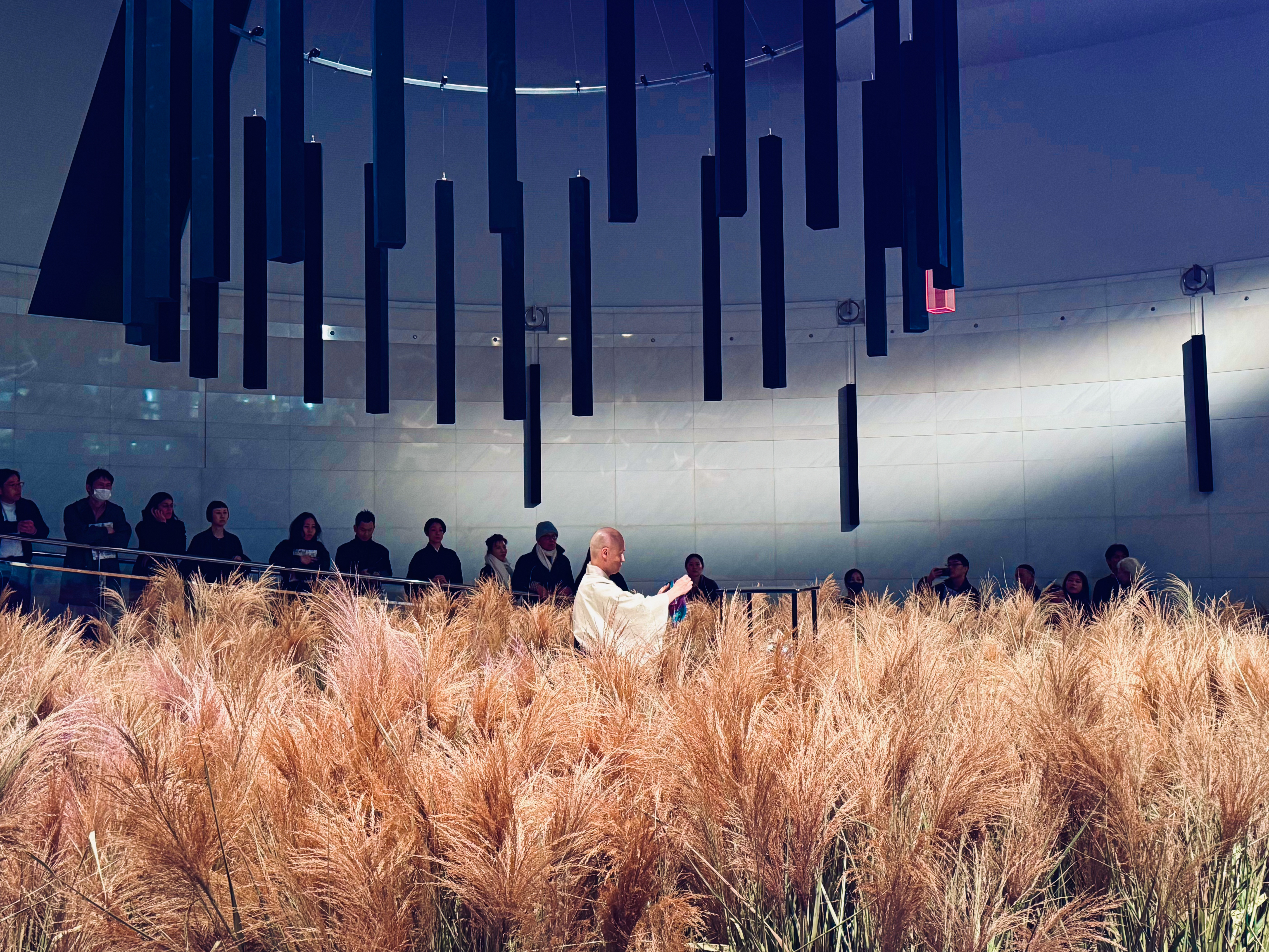
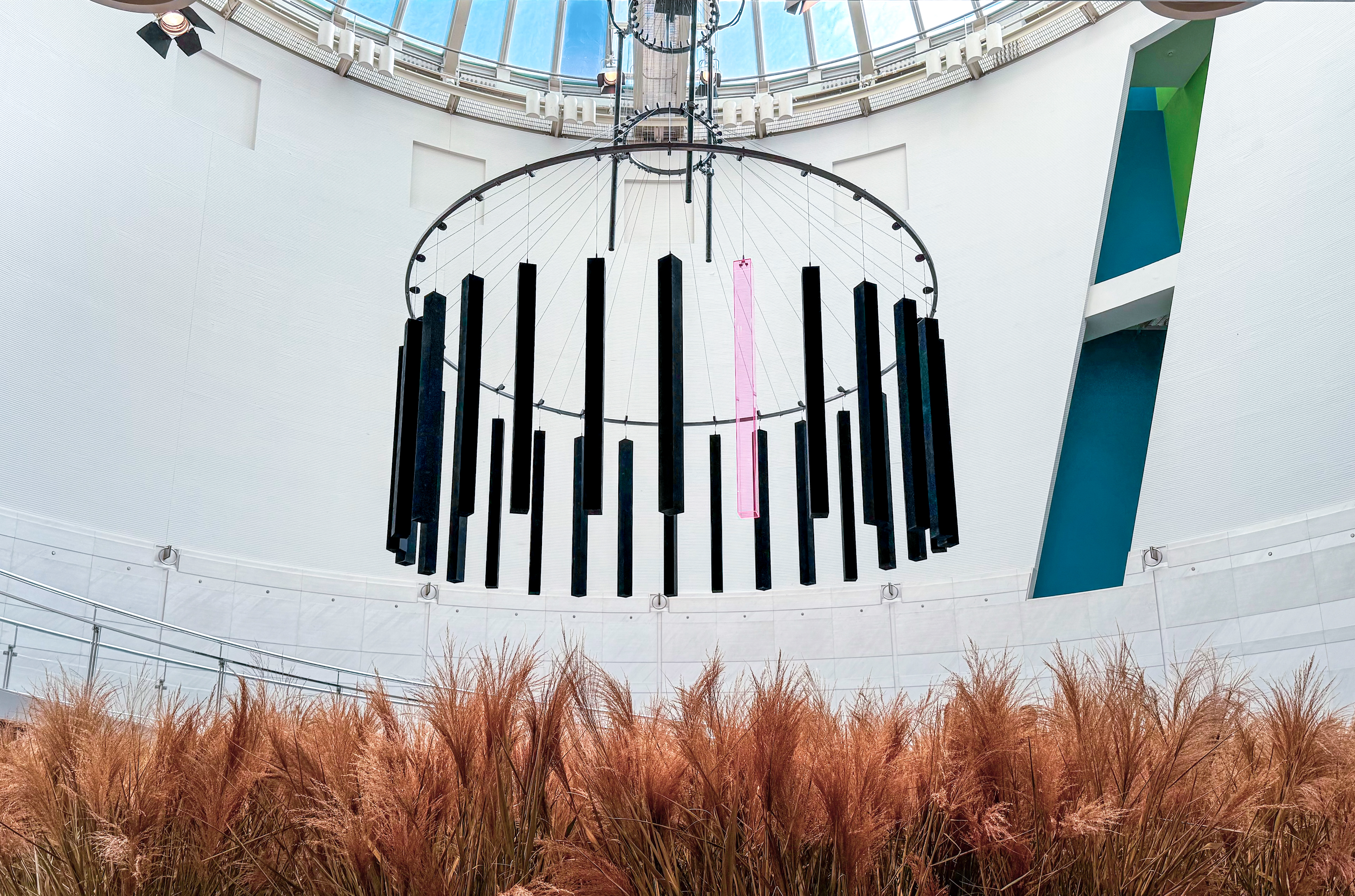
The Alternative Computations series sculpts the cosmologies of lost vernacular mathematics. Built from quantum noise — discarded by mainstream quantum computing — this automated instrument takes sky, earth, and human as its three-layer structure. Twenty-eight sangi (counting rods) orbit overhead as the Twenty-Eight Lunar Mansions. A tatami floor defines the sacred threshold. More than four thousand reeds fill the space.
In a corner of Tokyo’s concrete forest, in dry reed fragrance, the dancer’s movements and tea master’s gestures, audience presence, and meteorological data are thrown into a quantum computer embedded in the ceiling’s sangi mechanism. High-dimensional dynamics set the sangi’s orbits and descend as rain sound. Mechanical creaking holds the weight of matter, anchoring experience between dream and waking. Thunder, wind, insects, cranes and frogs — a 28-minute sound collage. Each cycle ends a universe; another begins.